Eco-friendly graffiti removal – no chemicals, no high-pressure

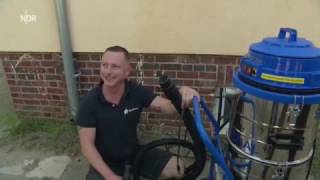
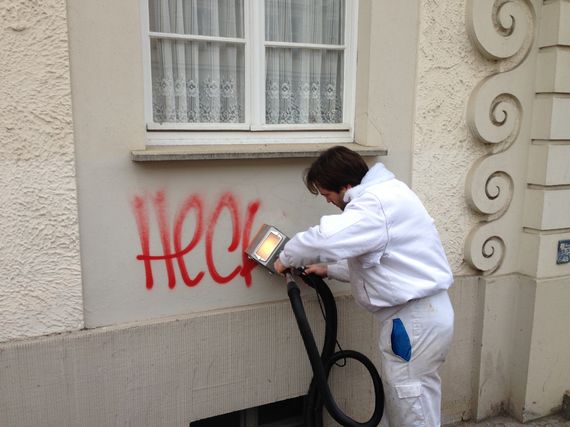
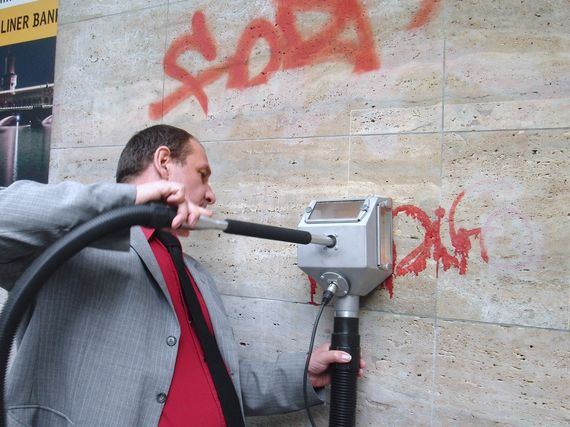
systeco manufactures the patented Tornado ACS vacuum blasting (negative-pressure blasting) system for eco-friendly graffiti removal. The process is water-free, chemical-free, and pressure-free—clean, controlled, and surface-safe.

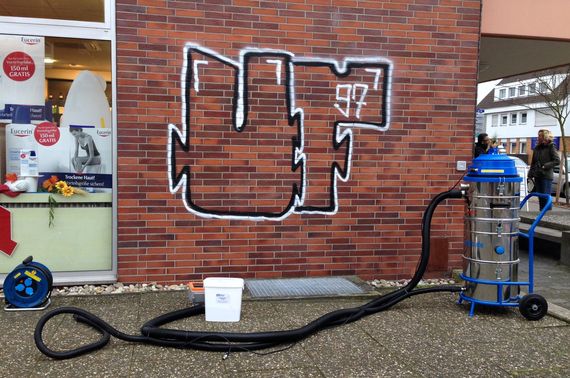
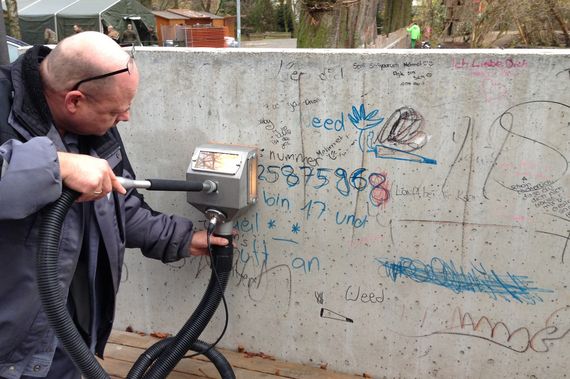
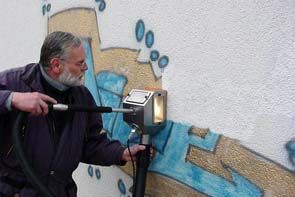
Environmentally friendly graffiti removal on all types of building facades can be carried out quickly, safely, and effectively using the Tornado ACS graffiti removal machine. Thanks to the revolutionary vacuum blasting process, the Tornado ACS removes graffiti from almost any surface – gently and without leaving residue.

Advantages of the Tornado ACS vacuum blasting system:
- No wastewater, no soaking of the façade
- Controlled capture of residue and particles at the job site
- Suitable for brick, natural stone, concrete, and many other surfaces
- Ideal for sensitive areas (heritage protection) and municipal applications

With the future-oriented Tornado ACS cleaning technology, exterior walls and masonry are completely freed from graffiti – without high pressure, without water, and without environmentally harmful chemicals. The surface remains undamaged, while sprayed facades look clean and well maintained again within a very short time.

Eco-friendly graffiti removal with the Tornado ACS is ideal for private, commercial, and public buildings, combining maximum cleaning performance with sustainable environmental protection.

Questions about environmentally friendly vacuum blasting:

Is it really possible to remove graffiti without high pressure and chemicals?

Yes. At systeco, graffiti removal works using the vacuum blasting process (Tornado ACS) without high pressure and without chemical cleaners. The paint is removed dry using blasting media, and the residues are extracted directly at the blasting head under negative pressure and collected in a controlled manner. As a result, no high-pressure water and no chemicals are required – ideal when water/wastewater or aggressive cleaning agents are undesirable at the site.

Which substrate is the process suitable for (brick, natural stone, concrete, metal)?

The vacuum blasting process (Tornado ACS) by systeco is particularly suitable for robust, mineral, and hard surfaces – typically:

- Brick / Clinker: very common application on facades and plinth/base areas
- Natural stone: well suited depending on the type of stone (hard natural stones are generally very well suited)
- Sandstone: for soft/porous stones, the process is set especially gently and always tested in advance
- Concrete: well suited, especially for dense and robust concrete surfaces
- Plastic: well suited (telecom and power cabinets), depending on the coating and the desired finish
- Facade coatings: (including ETICS/EIFS) very well suited, work is carried out using only one motor stage
- Metal: also possible, depending on the coating and the desired finish

Important: The appropriate settings (blasting media, grain size, power, working method) are always determined using a test area. This ensures that graffiti is removed effectively while the surface remains visually as unchanged as possible.

Is the process suitable for listed buildings and historic façades?

Yes, frequently. The vacuum blasting process (Tornado ACS) by systeco is also used for listed buildings and historic facades, because it operates without high-pressure water and without chemical cleaners, and therefore does not soak the building fabric or expose it to chemical stress. There is also a certificate for this from TÜV Nord.

In heritage conservation, a test area is always essential: this is used to select the blasting media, grain size, and settings so that graffiti is removed while the surface remains as gentle on the original material as possible – taking into account the requirements of the heritage conservation authority.

Are shadows/ghosting still visible – and what can be done about it?

This can occur – especially on porous and soft substrates such as sandstone or brick, as well as on painted facades, when paint pigments have already penetrated deep into the surface. Whether “ghosting” remains depends mainly on the substrate, the type of paint (e.g. spray paint / marker), the exposure time, and any existing coatings.

What can be done about it?

- Create a test area: This makes it possible to see in advance how pronounced the ghosting is and which settings deliver the best result.
- Optimize the settings: Select blasting media / grain size and working method so that as much pigment as possible is removed without unnecessarily roughening the surface.
- Optional post-treatment: Depending on the object, a light blending / gentle cleaning may be useful; afterward, an anti-graffiti coating can be applied if required.

Important: With very deeply absorbed pigments, completely shadow-free removal is hardly possible without visibly altering the surface.

How does dust and abrasion collection work (cleanliness at the point of use)?

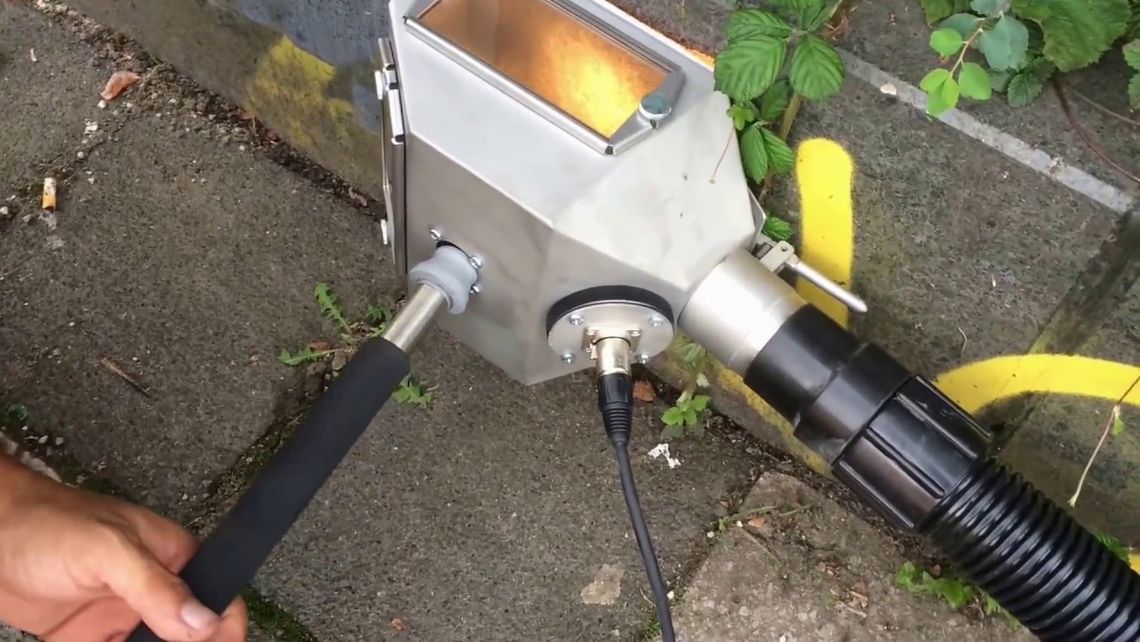
During vacuum blasting (Tornado ACS) by systeco, dust and abrasion are extracted directly at the blasting head (blast hood): while the suctioned blasting media removes the paint layer (impacting the surface at approx. 400 km/h), the negative pressure ensures that paint residues, dust, and blasting media are captured immediately and returned to the system in a closed loop. There, the residues are separated via filters and collected.

The practical advantage: significantly less dirt is generated at the job site, the work area remains clean and controlled, and the residues can be disposed of in a targeted manner – especially beneficial in sensitive areas, city centers, or locations with public traffic.


What consumables are required (granulate/filter) and how are they disposed of?

For graffiti removal with Tornado ACS, blasting media (abrasive) in various materials and grain sizes is used – typically glass granulate, asilit, and walnut shell granulate. In addition, the system operates with 2–3 filters, which usually allow a full working day of operation. The filters are not classic wear parts, but depending on use they should be cleaned every 2–4 hours – e.g. by tapping out, blowing out, or washing out (exception: HEPA filter, this one is not washed out).

The main wear parts are glass panes, foam rubber seals at the blasting head, and the blasting lance. The ongoing material costs for granulate and wear parts are typically around €2–4 per m² (depending on the substrate and the type of soiling).

The collected residue and the used blasting media are not classified as hazardous waste and can therefore be disposed of with normal household waste.


Ultimate graffiti removal – without high pressure, without water, without chemicals

The Tornado ACS cleaning machine stands for modern, safe, and environmentally friendly graffiti removal. The system can be used anywhere, is easy to operate, and makes high-pressure cleaners, dry ice blasting, and chemical graffiti removers unnecessary.

With the Tornado ACS, graffiti can be removed effectively and gently – without causing any damage to the surface. The method is suitable for numerous materials such as brick, plaster, concrete, paint, tiles, natural stone, plastic, as well as listed and heritage-protected facades.

Graffiti removal using environmentally friendly vacuum blasting technology

The eco-friendly vacuum blasting technology of the Tornado ACS operates in a closed-loop system. As a result, no contaminated wastewater, no hazardous waste, and no emissions are produced. The use of water and chemicals is completely eliminated.

Another key advantage: when removing graffiti with the Tornado ACS, no protective clothing or special occupational safety measures are required. Even on building facades along busy streets or in public areas, the cleaning machine can be used without barriers or cordoned-off zones.

Effortless removal of graffiti from building facades and walls

On our website, you will find comprehensive information about the wide range of applications of Tornado ACS cleaning technology. In addition to graffiti removal from facades and walls, the system is also suitable for the gentle removal of various types of soiling on sensitive surfaces.

By choosing the Tornado ACS cleaning machine, you are opting for an efficient, sustainable, and future-proof solution for professional graffiti removal.

Glossar

- Vacuum blasting / negative-pressure blasting: A blasting process in which abrasion and blasting media are extracted directly at the   blasting head by negative pressure and removed in a controlled manner.
- Vacuum suction blasting (synonym): A colloquial term for negative-pressure / vacuum blasting.
- Low-dust blasting: An umbrella term; it may also refer to wet blasting or blasting with separate extraction – it does not automatically mean vacuum / negative-pressure blasting
- High-pressure cleaning: Water-based; generates wastewater and can soak substrates.
- Ghosting: A slight “shadow” effect when pigments have penetrated porous substrates; dependent on material, paint type, age, and pre-treatment.