Sustainable graffiti removal - eco-friendly and CO2-neutral

Graffiti - some call it art, others smearing. One thing is certain, however: as a homeowner, you would like to decide for yourself how the façade is designed. Graffiti is also more than annoying on listed or public buildings.

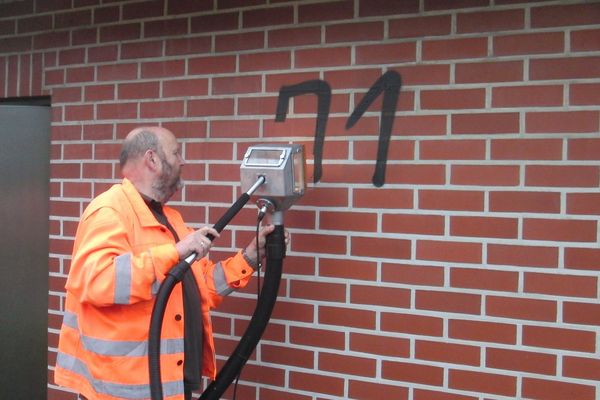
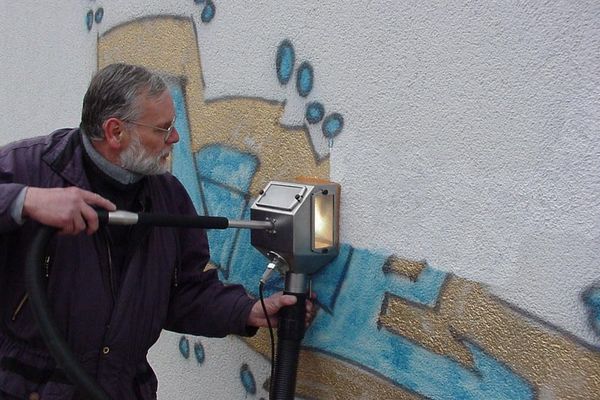
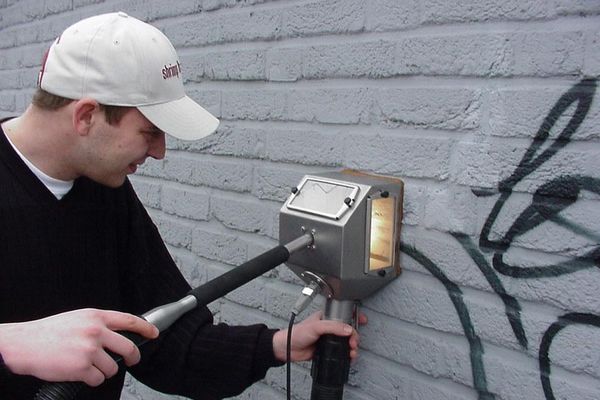
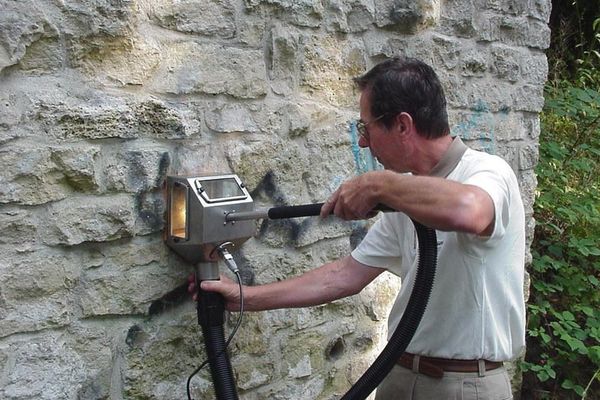
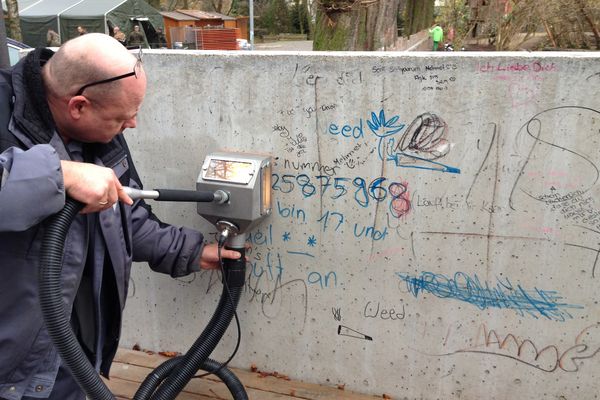
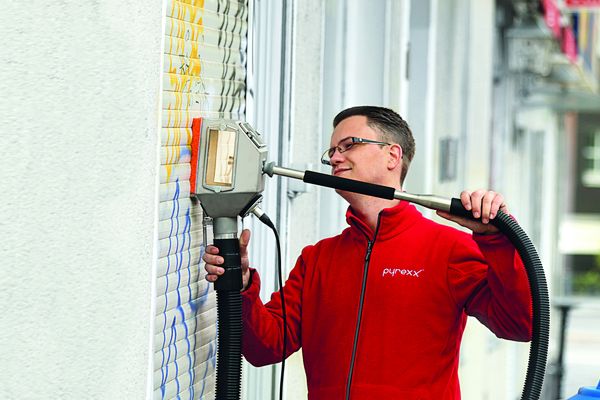
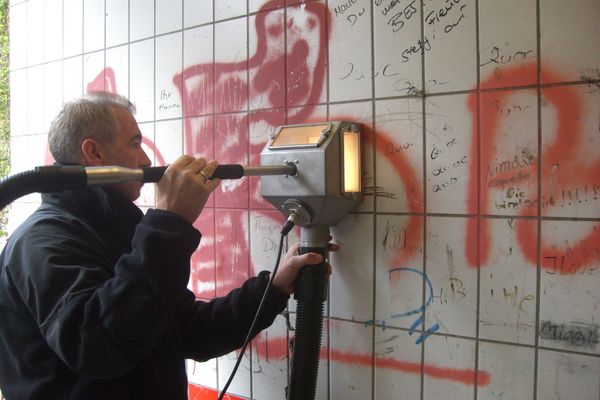
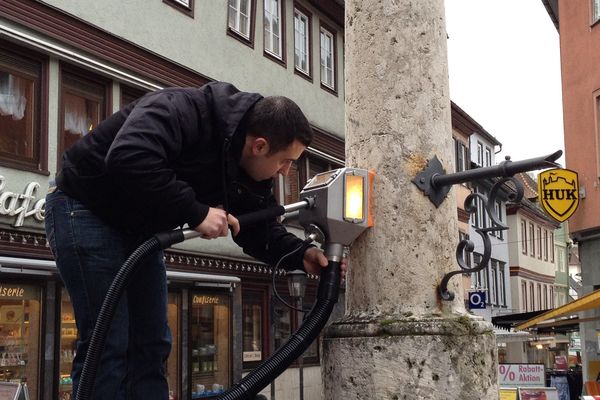
With the patented Tornado ACS cleaning technology, graffiti removal on clinker, natural stone, concrete, plaster, paint, tiles, plastic and many other surfaces is quick and easy.

Our cleaning machine is the ideal alternative to high-pressure cleaners and dry ice blasting. The minimally abrasive working method is gentle on the surface to be treated. Due to the closed circuit, no special occupational safety measures are necessary for graffiti removal.

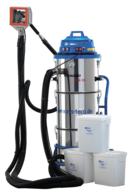
The unique vacuum blasting technology enables clean and environmentally friendly work. By using renewable raw materials, such as nutshell, we are 100% CO2 neutral. The Tornado ACS cleaning system is set up and ready for use in just a few minutes. The time-consuming disposal of dirty cleaning agents is no longer necessary, as cleaning is done without high pressure, without water and without chemicals. The paint on the wall is only broken up and not dissolved, therefore the removal and the remaining granulate is not hazardous waste and can be disposed of normally in household waste.

Questions about graffiti removal

🚫 Why Remove Graffiti with Vacuum Blasting Technology?

Environmentally Friendly Graffiti Removal – A Comparison of Modern Alternatives

When it comes to graffiti removal, several methods are available: wet blasting, dry ice blasting, sandblasting, laser technology, and the modern vacuum blasting method, also known as the negative pressure blasting system.

While wet blasting, dry ice, and sandblasting have been used for years, they are now considered outdated – not only do they result in high disposal costs, but they also pose environmental risks. In particular, sandblasting requires the used abrasive to be disposed of as hazardous waste, which is becoming increasingly expensive.

🌱 Graffiti Removal Using Vacuum Blasting Technology – Sustainable, Safe, and CO₂-Neutral

The vacuum blasting method by systeco offers a future-proof alternative to traditional techniques. The key benefits at a glance:

- Chemical-free graffiti removal without water or solvents
- No disposal issues – the blasting material remains in a closed-loop system
- Climate-neutral and resource-efficient
- No risk of injury due to enclosed technology
- Gentle on materials, even on delicate surfaces like natural stone or clinker brick

✅ Conclusion: Sustainable Graffiti Removal with the Negative Pressure Blasting System

For those looking for an environmentally friendly, safe, and cost-effective graffiti removal solution, systeco’s vacuum blasting method is the right choice. It’s a modern technique that eliminates hazardous waste while protecting the environment, human health, and your budg.

🛡️ Do I need protective clothing for graffiti removal?

Graffiti Removal with the Tornado ACS – Safe, Clean, and No Protective Clothing Required

When removing graffiti with the Tornado ACS cleaning system, there’s no need for protective clothing. This is thanks to the innovative functionality of the closed vacuum blasting system developed by the manufacturer systeco.

Due to the constant vacuum and the fully enclosed cycle, neither blasting media nor dirt particles escape to the outside. As soon as the blasting hood is lifted from the surface, the suction stream immediately stops – the circuit is interrupted, and the blast collapses. This eliminates the risk of injury.

✅ Maximum Safety During Graffiti Removal – Even with Direct Contact

The risk of injury is virtually zero: Even if you accidentally place your fingers in the blasting area, nothing happens – the technology is so gentle it can even remove nail polish without damaging the skin.

We regularly demonstrate this unique feature live at trade fairs – a powerful testament to the safety and precision of the Tornado ACS system.

🔒 Safe Graffiti Removal Without Chemicals, Pressure Washing, or Protective Measures

Unlike conventional methods such as high-pressure cleaning, sandblasting, or chemical cleaners, the Tornado ACS uses vacuum blasting to provide a clean, dry, and safe solution for graffiti removal – with no risks. It's ideal for schools, indoor spaces, public institutions, and sensitive surfaces.

🚀 What area performance can vacuum blasting achieve?

Efficient Graffiti Removal with the Vacuum Blasting System – Fast, Clean, and Eco-Friendly

When removing graffiti using systeco's vacuum blasting system, a surface performance of 3 to 5 m² per hour can be achieved. For multi-layered graffiti, the cleaning effort may be slightly higher – but the method remains efficient and time-saving.

⏱️Quick Setup and Takedown – Ideal for Small Areas

A major advantage: setup and takedown each take only about 5 minutes. This makes the systeco cleaning machine particularly suitable for removing smaller graffiti tags on building facades, garages, or public walls.No lengthy preparation, no need for a water connection – simply set it up, clean, and you're done.

♻️ Clean Alternative to Pressure Washing and Dry Ice Blasting

The systeco cleaning technology is an environmentally friendly alternative to high-pressure cleaning or dry ice blasting. Thanks to the closed-loop system, no paint residues, dirt, or blasting media are released into the environment.

The cleaning process is dry, chemical-free, and leaves no residues – perfect for use in sensitive areas such as:

- Courtyards
- Schools & kindergartens
- Historic buildings
- Residential complexes

✅ Conclusion: Remove Graffiti with systeco – Efficient, Sustainable, and Gentle
 

With the systeco cleaning machine, you’re choosing a modern and sustainable method for graffiti removal that offers high efficiency, minimal setup time, and maximum environmental protection.

🏨 Can I remove graffiti indoors?

The Tornado ACS Cleaning Machine from systeco – Perfect for Indoor Use

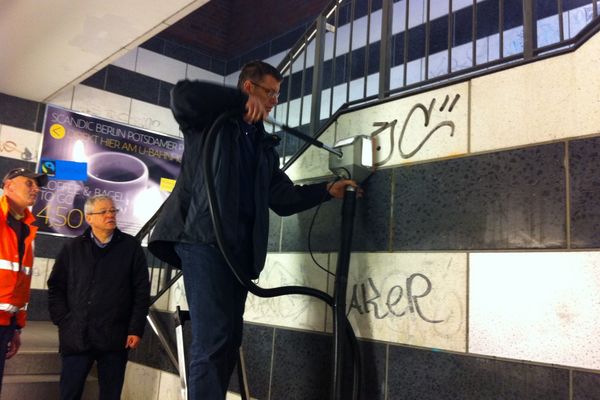
Thanks to its closed vacuum blasting system, the Tornado ACS cleaning machine from systeco is ideal for indoor applications. The surrounding area remains completely dust-free and clean – no dirt particles or blasting media escape into the environment.

With a noise level of just 75 dB, the machine is no louder than a powerful vacuum cleaner, making it fully suitable for indoor operation.

🏨 Effective Tile Joint Cleaning in Hotels and Sanitary Areas

A practical example: In many hotels, the Tornado ACS vacuum blasting system is used to clean grout lines in bathrooms. Dirty or discolored joints are thoroughly and gently cleaned without damaging the tiles or surrounding surfaces.

Within just a few hours, the bathroom looks like new again – without chemicals, water, or the need for time-consuming post-cleaning.

✅ Benefits of Indoor Cleaning with the systeco Cleaning Machine:

- Suitable for use in almost any indoor environment
- No dirt, no dust, no residue
- Quiet operation at only 75 dB
- Chemical-free cleaning, even on sensitive materials
- Ready for use in just minutes

🌿 Ideal for Schools, Hotels, Clinics, and Public Facilities


Whether in hotels, office buildings, schools, clinics, or public institutions – the Tornado ACS cleaning system offers a safe, hygienic, and eco-friendly solution for cleaning a wide range of indoor surfaces.


♻️ How does the process differ from sandblasting or dry ice blasting?

🌿 Vacuum Blasting – The Safe and Gentle Alternative to Sandblasting and Dry Ice Blasting

Unlike conventional cleaning methods such as sandblasting or dry ice blasting, the vacuum blasting system by systeco offers significant advantages in terms of safety, environmental compatibility, and surface protection.

❌ No Fine Dust, No Health Risks

Sandblasting and dry ice blasting often produce large amounts of hazardous fine dust and spray mist, which can spread uncontrollably into the surroundings. This poses a risk to operators, nearby residents, and the environment—especially in indoor spaces or high-traffic areas.

In contrast, vacuum blasting operates in a closed-loop system that prevents dust, mist, or particles from escaping. The entire cleaning process is carried out under negative pressure—completely clean, emission-free, and safe.

♻️ No Hazardous Waste – Reusable Blasting Media

With sandblasting, the used abrasive often has to be disposed of as hazardous waste due to contamination with pollutants. In the systeco process, however, the blasting media remains in circulation and can be reused up to 80 times. This not only eliminates disposal costs but also significantly reduces the environmental footprint of the cleaning process.

🛡️ Gentle Cleaning – No Surface Damage

Another major advantage of vacuum blasting is its gentle effect on treated surfaces. While sandblasting or high-pressure cleaning can cause material loss, grooves, or roughening due to their abrasive nature, vacuum blasting leaves the substrate virtually untouched.

Even delicate materials such as natural stone, brick, plaster, metal, or tiles can be cleaned effectively—without structural damage or surface alteration. This makes the process ideal for listed buildings, façade maintenance, and indoor applications.

💰 How much does graffiti removal with the vacuum blasting method cost?

The cost of graffiti removal using the vacuum blasting method depends on various factors—particularly the size of the area to be cleaned, the degree of contamination, and the type of surface material.

Compared to traditional methods like sandblasting or high-pressure cleaning, systeco’s process is more cost-effective in the long term, as there are no expensive disposal or chemical costs and resource consumption is minimal.

📊 Average Cleaning Costs per Square Meter

For calculation purposes, you can expect the following average costs per square meter (m²):

- €1 for electricity consumption
- €1 for wear parts
- €1 for blasting media (reusable up to 80 times)

In addition, there are labor costs and a proportional share of machine costs (based on the Tornado ACS system). Assuming an average usage of 30 operating hours per month, the effective machine cost is approximately €4 per m².

Conclusion: Efficient and Cost-Effective Cleaning with No Hidden Costs

Thanks to its closed-loop system, low operating costs, and high efficiency, the systeco vacuum blasting method offers a sustainable and affordable alternative to conventional graffiti removal methods—without chemicals, water, or extensive post-cleaning.

Removing graffiti eco-friendly and gently from surfaces ...

Graffiti removal method

The variant with commercially available graffiti remover

Special graffiti removers are available in specialised shops. You can use them yourself. The graffiti remover is applied to the graffiti. After a certain time, the paint swells and can be removed with a brush or sponge. The whole process is usually only suitable for very small graffiti. However, it is problematic that in a final step, the paint has to be washed off. However, since both the graffiti paint and the remover are chemical solutions, the residues can easily get into the groundwater. The water with the chemical residues must therefore be collected and disposed of separately. When choosing a product, one should therefore check whether biodegradable agents are available. Since the solutions are usually quite aggressive, the process can quickly cause damage to the subsoil if handled incorrectly. It is not uncommon for the paint underneath the graffiti to come off as well. The graffiti must then be repainted. This method should not be used on sensitive surfaces.

The high-pressure hot water variant with chemicals

The high-pressure hot water variant works in exactly the same way as the manual method with a chemical agent for graffiti removal. The solution or paste is first applied to the unwanted artwork and then removed with a high-pressure jet. The high-pressure jet has a pressure of about 120 bar. The water temperature is around 70 degrees. The advantage of the method is the thoroughness with which the graffito itself is flushed out of the pores. However, the method can by no means be described as gentle. On the one hand, the substrate can be damaged, on the other hand, the environment is considerably polluted by this technique. This refers both to the substances that can penetrate the groundwater and to the enormous water consumption that is necessary in this process. Therefore, according to current legislation, a costly collection of the polluted water is always necessary, which makes the process considerably more expensive.

If the application of the process is incorrect, for example on a clinker facade, the salts in the soaked stones can reach the surface and white deposits can form. Once this condition has been caused, it can take up to four years until the salts have settled again and professional cleaning can be carried out.

The low pressure wet blasting process

With the low-pressure wet blasting method, a mixture of air and water and possibly a blasting agent is blasted onto the graffiti. Depending on the surface and type of graffiti, the pressure is adjusted. As a rule, it is between 0.2 and 4 bar. The abrasive varies in hardness and grain size depending on the surface. The graffiti must be blasted from several angles to achieve optimal results. The disadvantage of the method is that components of the plaster are exposed. Also, residues from the spray paints may have penetrated deep into the pores where they cannot be removed by this method. Often, distinct shadows appear on the walls and facades.

The vacuum blasting method

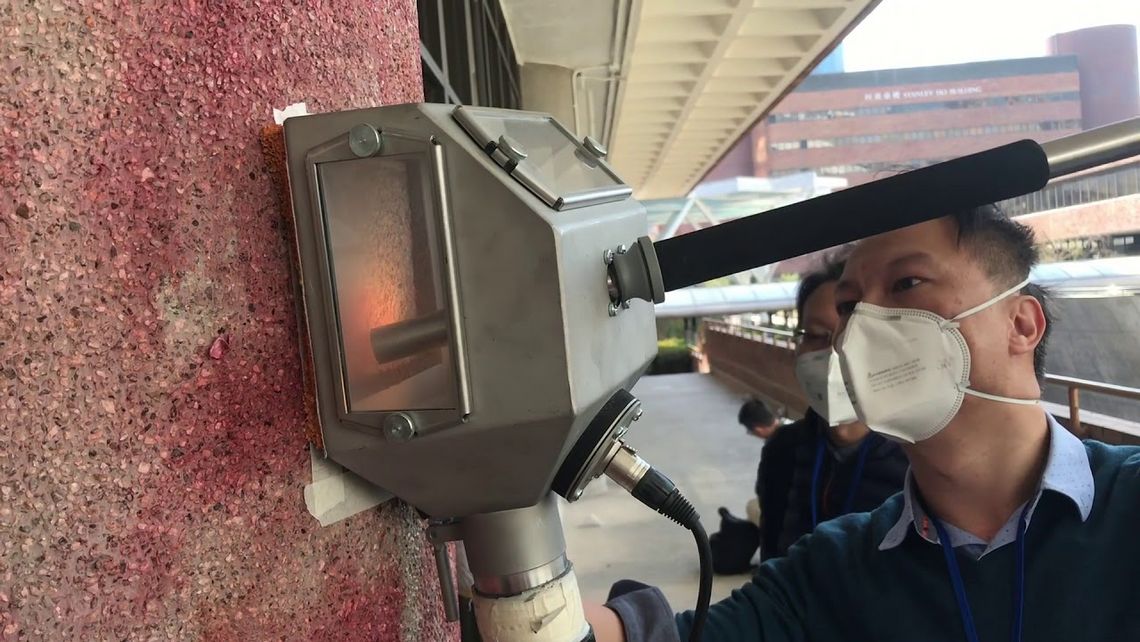
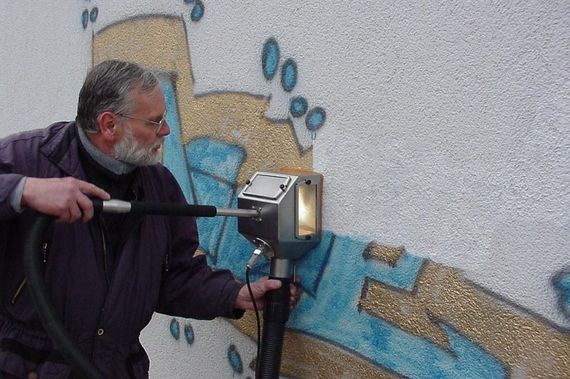
The vacuum blasting process works exclusively with negative pressure. As with sandblasting, different blasting media are used here. However, the process differs considerably from pressure blasting. The vacuum sucks the abrasive out of the storage container. In the blasting lance, the granulate is accelerated to approx. 400 km/h and hits the graffiti to be removed. The paint is loosened by the impact of the granulate. The advantage of this method is that it is a closed circuit, as the abrasive is automatically sucked back into the container through a hose by means of negative pressure. The dirt and paint particles are filtered out in a cyclone. The granulate goes back into the circuit. The cleaning technique is easy to operate, so that it can also be used by non-professionals. Vacuum blasting is also called a minimally abrasive process. This makes it well suited for very sensitive surfaces. The vacuum blasting method cannot be used for damp walls and facades.

The laser beam method

A special laser beam technology can also be used to remove graffiti. The laser is pulsed in a tiny fraction of a second. The light beam hits the paint smear and causes the paint to burst into tiny particles. The surface is not damaged, which is why even sensitive facades can be considered for this method. Another advantage is that it is environmentally friendly. No toxic chemicals are used and no water is consumed. The disadvantage of the laser beam technique is that it is more suitable for smaller lettering such as so-called "tags". Larger images would require an enormous amount of time and money. The acquisition costs of laser technology are also very high.

Dry ice blasting

Dry ice blasting exclusively uses dry ice for graffiti removal, which is blasted onto the surface to be treated at a low pressure of 0.5 to 16.0 bar. The graffiti comes off primarily due to the cold shock, because the dry ice has a temperature of about minus 80 degrees. Dry ice is CO2. However, if one now believes that the environment is burdened by additional CO2 emissions, this is a fallacy. Because it is merely a by-product of industry that is recycled, so to speak. Another advantage is that no harmful chemicals or water are used. In contrast to abrasive methods or methods using high pressure, dry ice is not as aggressive and is therefore also used for sensitive surfaces. However, damage to the façade is still possible. Of course, less sensitive surfaces such as plaster, concrete, bricks or clinker can also be cleaned from graffiti using this method. The storage costs for dry ice are quite high. Above all, the dry ice must be stored at -80 degrees. This only works for a short time.

Comparison of the advantages and disadvantages of the methods

In any case Graffiti should be removed relatively quickly , because a first graffiti encourages imitators to do more. In addition, the paint penetrates deeper and deeper layers over time, which makes graffiti removal more difficult. Especially on the south side, the paint is quickly burnt in by the sun. There are numerous methods available for graffiti removal. However, depending on the surface, not all methods are suitable. Applications based on abrasive blasting and pressure blasting can quickly cause more damage to the wall or façade than one would like. The consequences are expensive re-treatments.

Work on graffiti that you carry out yourself can also cause undesirable side effects, such as damage to the façade. This drives up costs unnecessarily. If you think about the environment, you should avoid using chemicals, water and high pressure as much as possible.

Of course, it is not only the protection of the substrate and the sustainability of the graffiti removal technique that play a role, but the result should also be right. Not all methods succeed in removing the graffiti from the pores. If the pressure is too low, for example, the wet blasting method will not be able to remove the last remnants of paint. All pressure blasting methods, even with dry ice, are not very environmentally friendly because everything that is removed flies around and remains on the ground. The disposal costs for this have skyrocketed.

Processes such as vacuum blasting are not only environmentally friendly because of the closed cycle, but also very easy to use. Special protective measures are not necessary.

If these considerations are taken into account, only vacuum blasting can be considered for the professional and proper removal of graffiti. In terms of treatment results, environmental friendliness and protection of the substrate, this method scores best. The environment is not polluted by chemicals and the substrate is not damaged. Even sensitive materials can be treated with vacuum blasting.

Clinker facade cleaning under monumental protection

Removing Graffiti from Listed Buildings – Safe, Surface-Friendly, and in Full Compliance

Removing graffiti from heritage-protected facades requires specialized methods that meet strict conservation standards, ensure material compatibility, and comply with local regulations. Traditional cleaning methods, such as sandblasting or chemical removers, are often prohibited due to their abrasive or harmful nature.

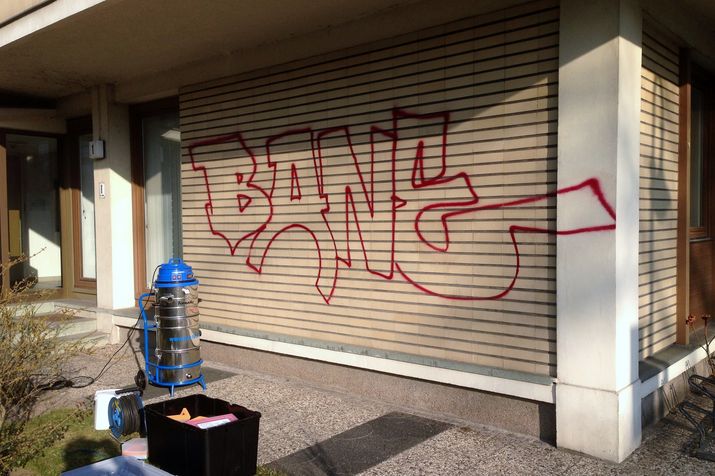
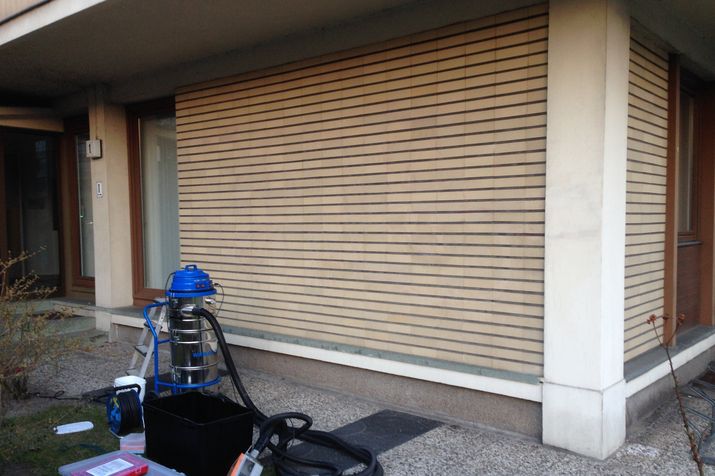
Real-world example: A protected clinker brick facade in Berlin-Charlottenburg was defaced with graffiti. The local district office approved graffiti removal only on the condition that no chemicals or abrasive blasting would be used.

The solution: the eco-friendly vacuum blasting technology from systeco. Using the Tornado ACS cleaning machine, the graffiti was gently removed without water, pressure, or chemicals. The result: complete graffiti removal with no damage to the historic surface – and fully compliant with preservation regulations.

Advantages of systeco technology for listed and historic buildings:

- Approved graffiti removal without water, chemicals, or high pressure
- Gentle treatment of sensitive surfaces such as clinker, natural stone, or stucco
- No risk of material loss or surface damage
- Environmentally friendly and CO₂-neutral – ideal for sensitive locations
- Dry, dust-free cleaning – no need for protective gear or area closures

systeco offers the ideal solution for municipalities, conservators, and cleaning professionals who seek to remove graffiti from heritage-listed properties safely, sustainably, and in full compliance with preservation standards.

Professional graffiti removal

Without a professional graffiti removal from facades and walls, most probably you wouldn't be able to recognize our cities today. To deal with this problem effectively, some things have changed, not only by law, also in the field of cleaning technology. Efficiency and Sustainability are two important aspects to consider. The cleaning technique Tornado ACS offers both components perfectly in one cleaning device.

Thanks to the patented and eco-friendly vacuum blast method in form of the Tornado ACS, graffities can be removed from facades effectively, residue-free and without polluting the environment. The simple operation of the cleaning machine turns the professional graffiti removal into an easy job, that can be done by any person without special knowledge.

Remove graffiti with negative pressure, clean, environmentally friendly and cost effective

Graffiti Removal Using Vacuum Technology – Clean, Eco-Friendly, and Cost-Efficient
Environmentally safe and surface-friendly graffiti removal with systeco's vacuum blast technology

Removing graffiti requires solutions that combine material protection, environmental responsibility, and cost-effectiveness. Conventional methods such as high-pressure cleaners or chemical solvents are often expensive, harmful to the environment, and can damage sensitive surfaces.

With the patented vacuum blasting technology from systeco, professionals gain access to an innovative, climate-neutral alternative. The Tornado ACS cleaning system removes graffiti effectively and gently – without water, pressure, or chemicals. The process is dry, residue-free, and CO₂-neutral.

This closed system uses a specialized mineral granulate, which is gently applied under negative pressure. It lifts the paint from the surface while simultaneously vacuuming it away – without harming the substrate. It is ideal for heritage facades, natural stone, clinker brick, and other delicate materials.

Key benefits of graffiti removal with systeco:

- Effective and gentle cleaning without residue
- No use of water, high pressure, or chemical agents
- Environmentally friendly, CO₂-neutral, and dry technology
- Safe for use in residential areas and public spaces
- No need for safety gear or cordoning off work zones
- Low operating costs and high efficiency

Whether on facades, transportation infrastructure, or public buildings, systeco offers the ideal solution for professional graffiti removalsustainable, economical, and surface-safe.